
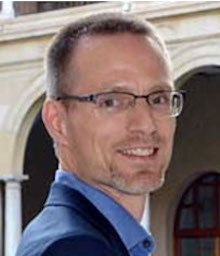
Harvard Title
Professor of Medicine
Administrative and Hospital Titles
Neuroscientist, Division of Sleep and Circadian Medicine, Departments of Medicine and Neurology, Brigham and Women's Hospital
Director, Medical Chronobiology Program, Brigham and Women's Hospital
Senior Investigator, Division of Sleep and Circadian Medicine, Departments of Medicine and Neurology, Brigham and Women's Hospital
Address
Medical Chronobiology Program, Division of Sleep and Circadian Medicine, BWH
221 Longwood Avenue (BLI-044)
Boston, MA 02115
Publications View
Reduced sleep efficiency in cervical spinal cord injury; association with abolished night time melatonin secretion.
Authors: Scheer FA, Zeitzer JM, Ayas NT, Brown R, Czeisler CA, Shea SA.
Spinal Cord
View full abstract on Pubmed
Spinal Cord
View full abstract on Pubmed
Short-wavelength sensitivity for the direct effects of light on alertness, vigilance, and the waking electroencephalogram in humans.
Authors: Lockley SW, Evans EE, Scheer FA, Brainard GC, Czeisler CA, Aeschbach D.
Sleep
View full abstract on Pubmed
Sleep
View full abstract on Pubmed
Organization of circadian functions: interaction with the body.
Authors: Buijs RM, Scheer FA, Kreier F, Yi C, Bos N, Goncharuk VD, Kalsbeek A.
Prog Brain Res
View full abstract on Pubmed
Prog Brain Res
View full abstract on Pubmed
Potential use of melatonin as adjunct antihypertensive therapy.
Melatonin, sleep, and circadian rhythms.
Kryger MH, Roth T, Dement WC (ed)
Authors: Melatonin in the regulation of sleep and circadian rhythms
Principles and Practice of Sleep Medicine
Principles and Practice of Sleep Medicine
Environmental light and suprachiasmatic nucleus interact in the regulation of body temperature.
Daily nighttime melatonin reduces blood pressure in male patients with essential hypertension.
Authors: Scheer FA, Van Montfrans GA, van Someren EJ, Mairuhu G, Buijs RM.
Hypertension
View full abstract on Pubmed
Hypertension
View full abstract on Pubmed
Light and diurnal cycle affect autonomic cardiac balance in human; possible role for the biological clock.
Cardiovascular control by the suprachiasmatic nucleus: neural and neuroendocrine mechanisms in human and rat.